Ferris Site Preparation Built for Blackland Clay
How blackland prairie soils shape what gets built on Ferris property
Across Ferris properties, sitework decisions hinge on the soil profile beneath. Northern Ellis County sits on deep blackland prairie—rich, expansive clay that has built generations of brick from local kilns and produced challenges for anyone trying to put a foundation, driveway, or pond on top of it. The same minerals that made Ferris a brick-manufacturing town give modern construction a real test in moisture management and load distribution.
The issue isn't whether the soil can support what you're building. It can. The issue is what happens during the wet-dry cycle, when clay swells in spring rains and contracts again through Texas summer heat. Without proper subgrade preparation, fill specification, and moisture conditioning, that cycle pulls slabs apart, cracks driveways, and turns gravel surfaces into ruts within a year.
Ferris properties run from rural acreage along FM 660 and FM 983 to industrial sites near the I-45 corridor, and each type comes with its own preparation requirements. Whether you're putting up a barn, adding a shop pad, or developing a small commercial site, the prep work decides how the finished project ages. Reach out and we'll come look at the lot before you finalize plans.
Ferris Sitework Methods Built Around Local Conditions
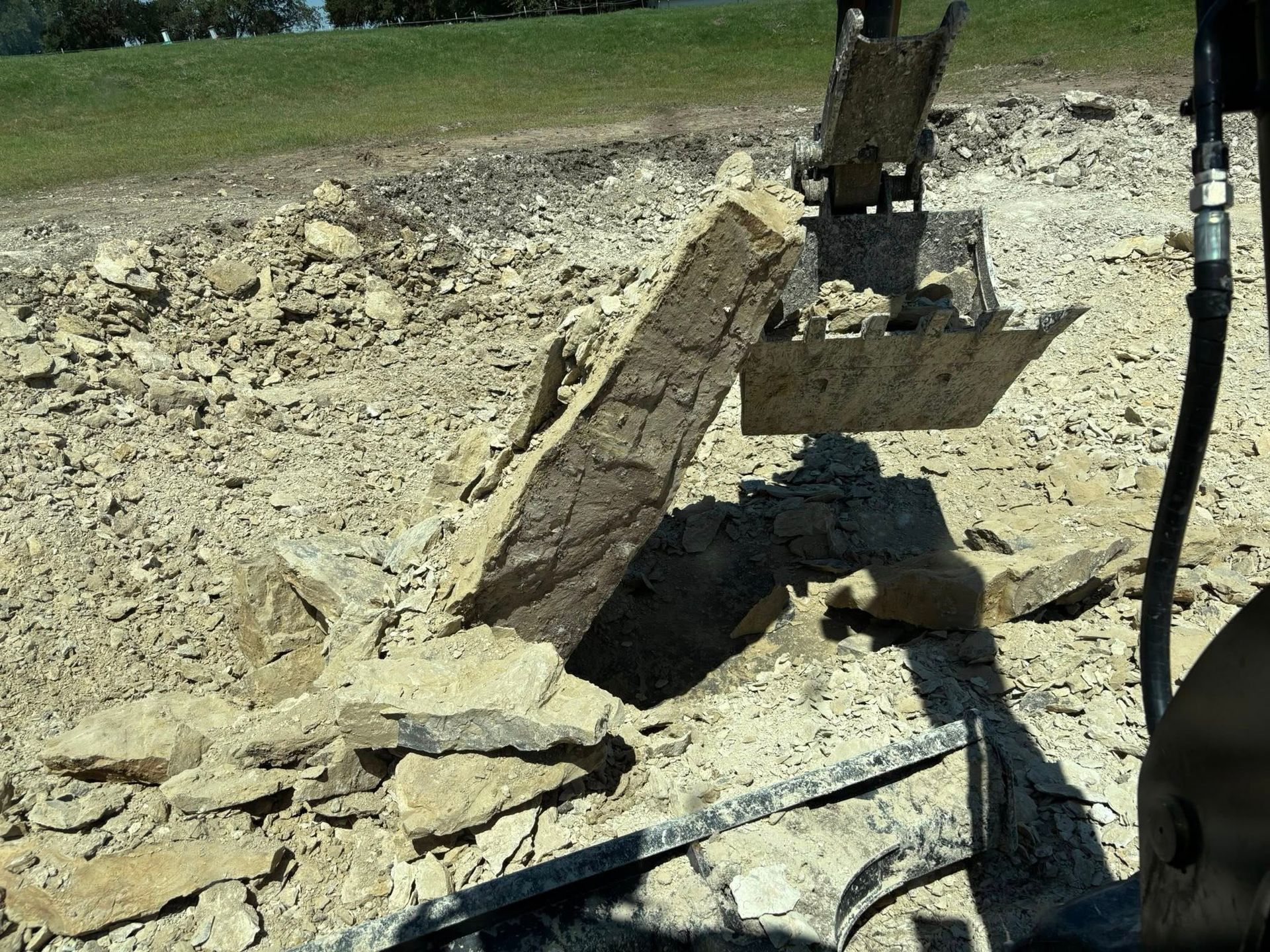
Working in Ferris means accounting for how blackland clay behaves once it's exposed and disturbed. Scott Ranch Sand & Gravel sequences operations around weather windows when conditions allow proper compaction, and we don't push fill placement into wet conditions just to keep a schedule. The pad that goes in this way costs more in time and less in repairs.
- When clay moisture exceeds optimum, work pauses until conditions allow proper density
- If existing fill is suspect, soil borings clarify what's beneath before specification finalizes
- Where slopes exceed three percent, erosion control is installed before excavation begins
- Depending on intended load, select-fill specification ranges from base course to engineered material
- For pond construction, bentonite or compacted clay liners get sized to the seepage rate observed
Material delivery—sand, gravel, base rock—gets coordinated with the work sequence so trucks aren't sitting and material isn't getting rained on. Schedule a property walk on your Ferris lot and we'll lay out what your sitework needs given the soil, slope, and intended use—before plans get finalized.
What Lasts (and What Doesn't) in Ferris Sitework
Ferris properties tend to be held a long time. Rural lots pass through families, industrial sites operate for decades, and the sitework underneath outlasts everything visible above grade. Doing it right pays off in the absence of problems you'd otherwise be solving every few years.
- Slab heaving from clay swell that wasn't accounted for in subgrade prep
- Driveway erosion at culverts where flow rate exceeded the pipe sizing
- Pond seepage from inadequate liner thickness or improper compaction of clay
- Settlement at building pad edges where fill wasn't placed in tight enough lifts
- Drainage failure on Ferris clay slopes during the first heavy spring rain after construction
If you're planning sitework on a Ferris property and want it to age well, request a free estimate. We'll tell you what the lot needs, what to budget, and how the schedule works around weather and conditions.